- 1
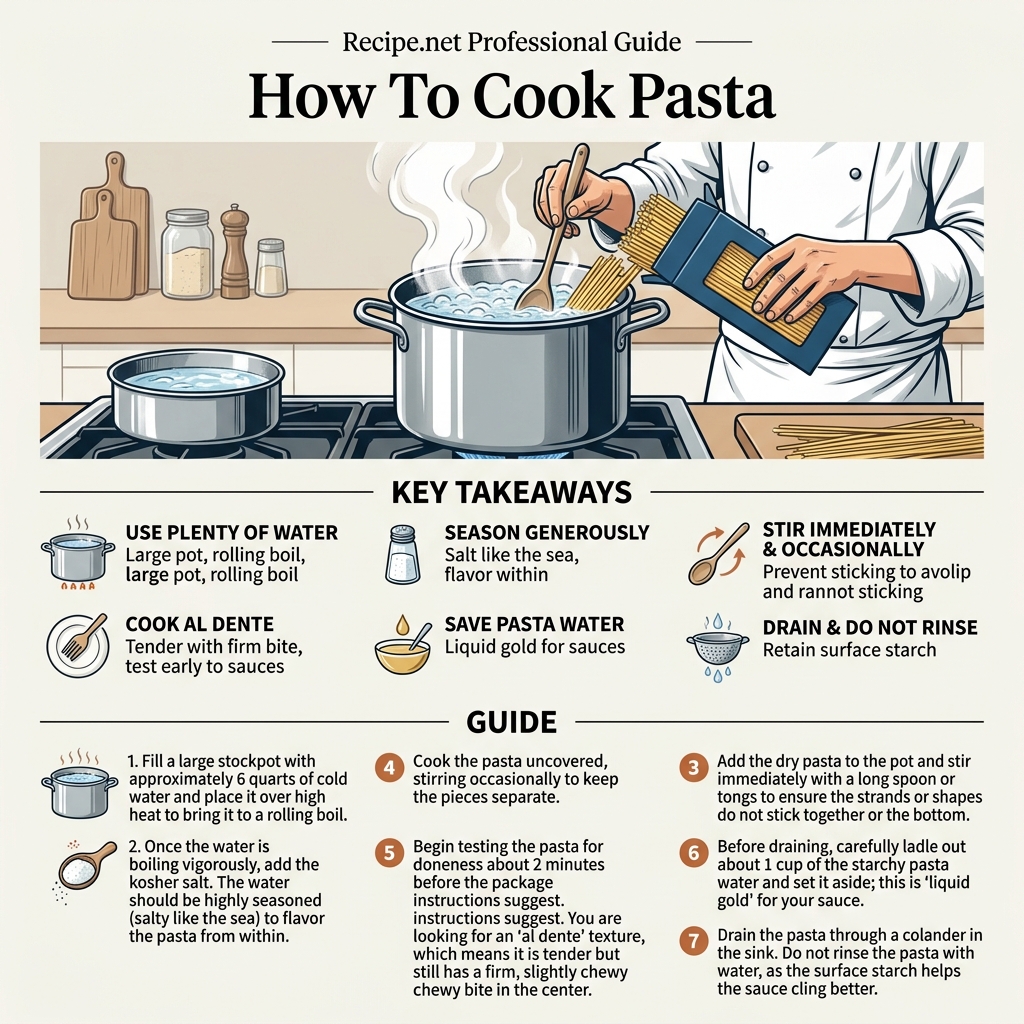
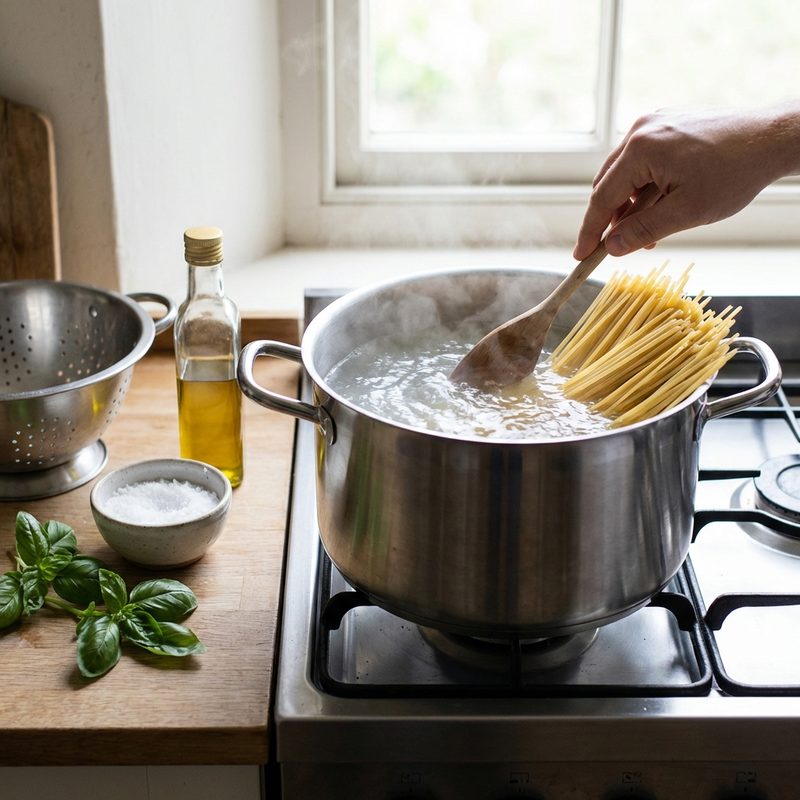
Fill a large stockpot with approximately 6 quarts of cold water and place it over high heat to bring it to a rolling boil.
- 2
Once the water is boiling vigorously, add the kosher salt. The water should be highly seasoned (salty like the sea) to flavor the pasta from within.
- 3
Add the dry pasta to the pot and stir immediately with a long spoon or tongs to ensure the strands or shapes do not stick together or to the bottom.
- 4
Cook the pasta uncovered, stirring occasionally to keep the pieces separate.
- 5
Begin testing the pasta for doneness about 2 minutes before the package instructions suggest. You are looking for an 'al dente' texture, which means it is tender but still has a firm, slightly chewy bite in the center.
- 6
Before draining, carefully ladle out about 1 cup of the starchy pasta water and set it aside; this is 'liquid gold' for your sauce.
- 7
Drain the pasta through a colander in the sink. Do not rinse the pasta with water, as the surface starch helps the sauce adhere.
- 8
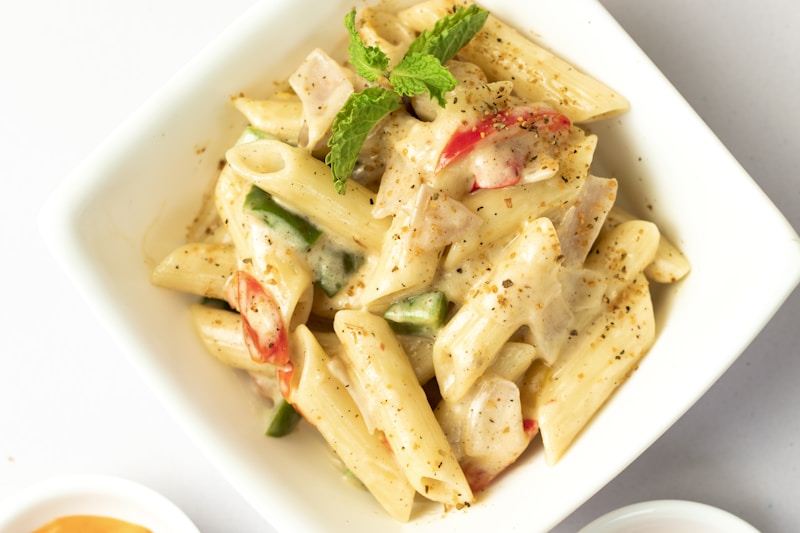
Immediately transfer the pasta to a pan with your warmed sauce, adding a splash of the reserved pasta water to emulsify and create a silky, professional finish.
💡 Key Takeaways
- ✓ Never add oil to your pasta water, as it creates a slick coating that prevents sauce from clinging to the noodles.
- ✓ Always use a large pot; pasta needs plenty of room to move around to avoid clumping and uneven cooking.
- ✓ The reserved pasta water contains starch that helps bind the sauce to the pasta and improves the overall mouthfeel.
- ✓ Salt the water only after it reaches a boil to prevent the salt from pitting the bottom of your stainless steel pots over time.